Numerical Analysis of Fluid-Structure Interaction (FSI) for Semi-Submersible FOWTs
XI International Conference on Computational Methods in Marine Engineering (MARINE 2025)
Sang-seok Han1*,
Saishuai Dai 1,
Momchil Terziev 1,
Hae-chan Yun 2,
Soon-seok Song 2
1
Department of Naval Architecture, Ocean and Marine Engineering, University of Strathclyde, the United Kingdom
2
Department of Naval Architecture and Ocean Engineering, Inha University, Republic of Korea
Abstract
This study presents a computational fluid–structure interaction (FSI) analysis of a semi-submersible floating
offshore wind turbine (FOWT) using a computationally efficient CFD-based framework. The method enables
structural flexibility without requiring external finite element solvers. The simulation model is based on the
OC6 Phase Ia semi-submersible platform at 1:50 scale and is implemented in STAR-CCM+ using the DFBI
Morphing feature combined with a multi-overset mesh strategy.
Structural deformation is handled entirely within the CFD environment, offering a practical and self-contained
FSI simulation approach. Model validation is conducted via free decay and regular wave RAO tests, showing
good agreement with experimental data. Comparative analyses between rigid-body and FSI-enabled models
reveal that structural flexibility increases surge and heave responses while slightly reducing pitch amplitudes.
Additionally, internal stress analysis identifies critical loading regions under wave excitation, emphasising the
importance of structural compliance in early-stage FOWT design. These results demonstrate the feasibility of
integrated CFD–FSI analysis using commercial tools and provide a foundation for extending the framework
to more realistic ocean environments, including irregular and extreme wave conditions.
Conference paper (2025)
XI International Conference on Computational Methods in Marine Engineering (MARINE 2025)
DOI:
10.23967/marine.2025.141
Selected Figures
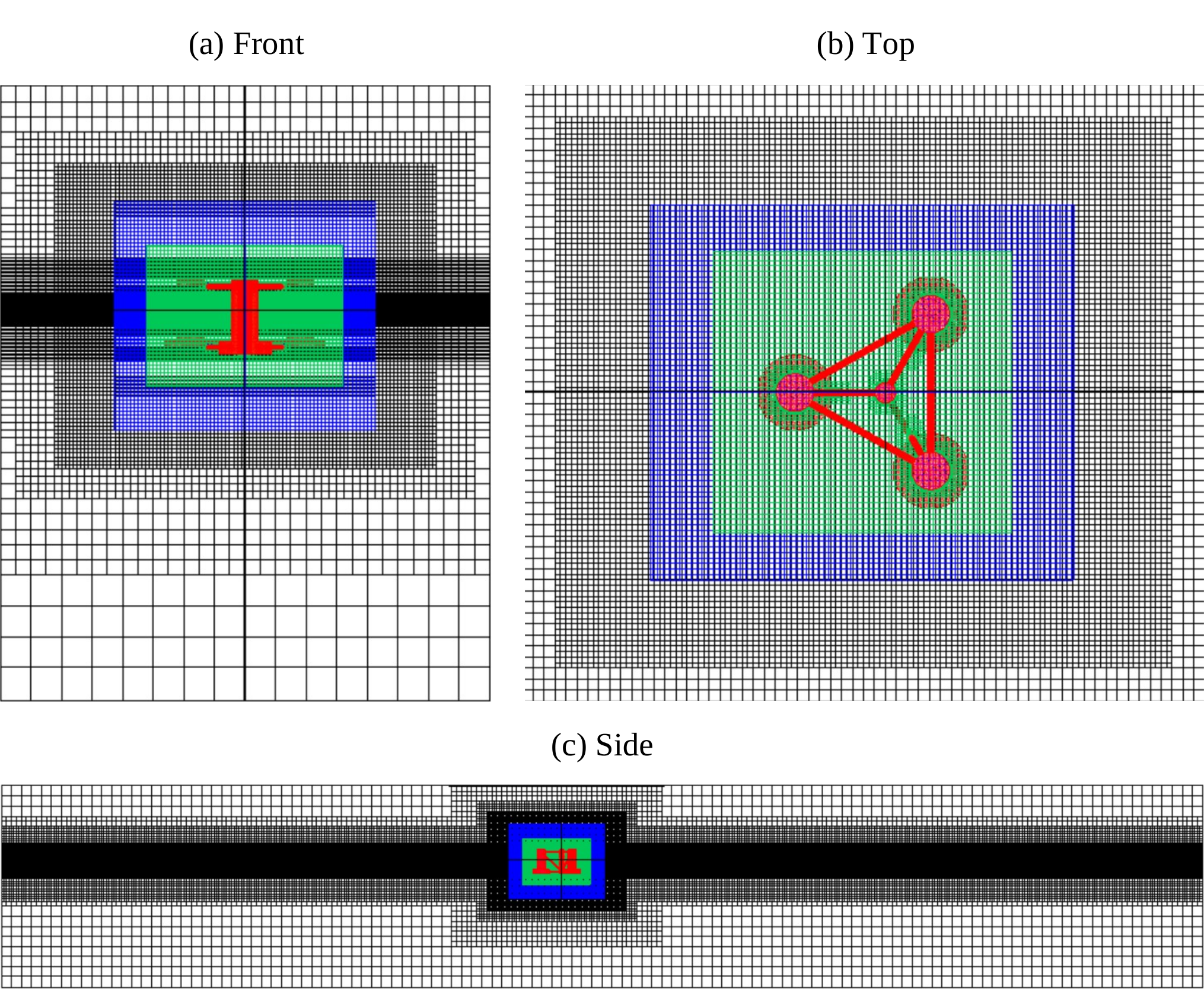
Figure 1.
Mesh configuration for FSI simulation using a double-overset strategy, enabling structural deformation and
stress evaluation.
The FSI simulations employ a double-overset configuration in which the first overset region resolves the
interaction between the platform and the surrounding fluid, while a second region linked to the morphing mesh
captures structural deformation and internal stress. The resulting setup contains approximately 4.6 million cells
and is intended to improve coupling fidelity between hydrodynamic loading and structural response.
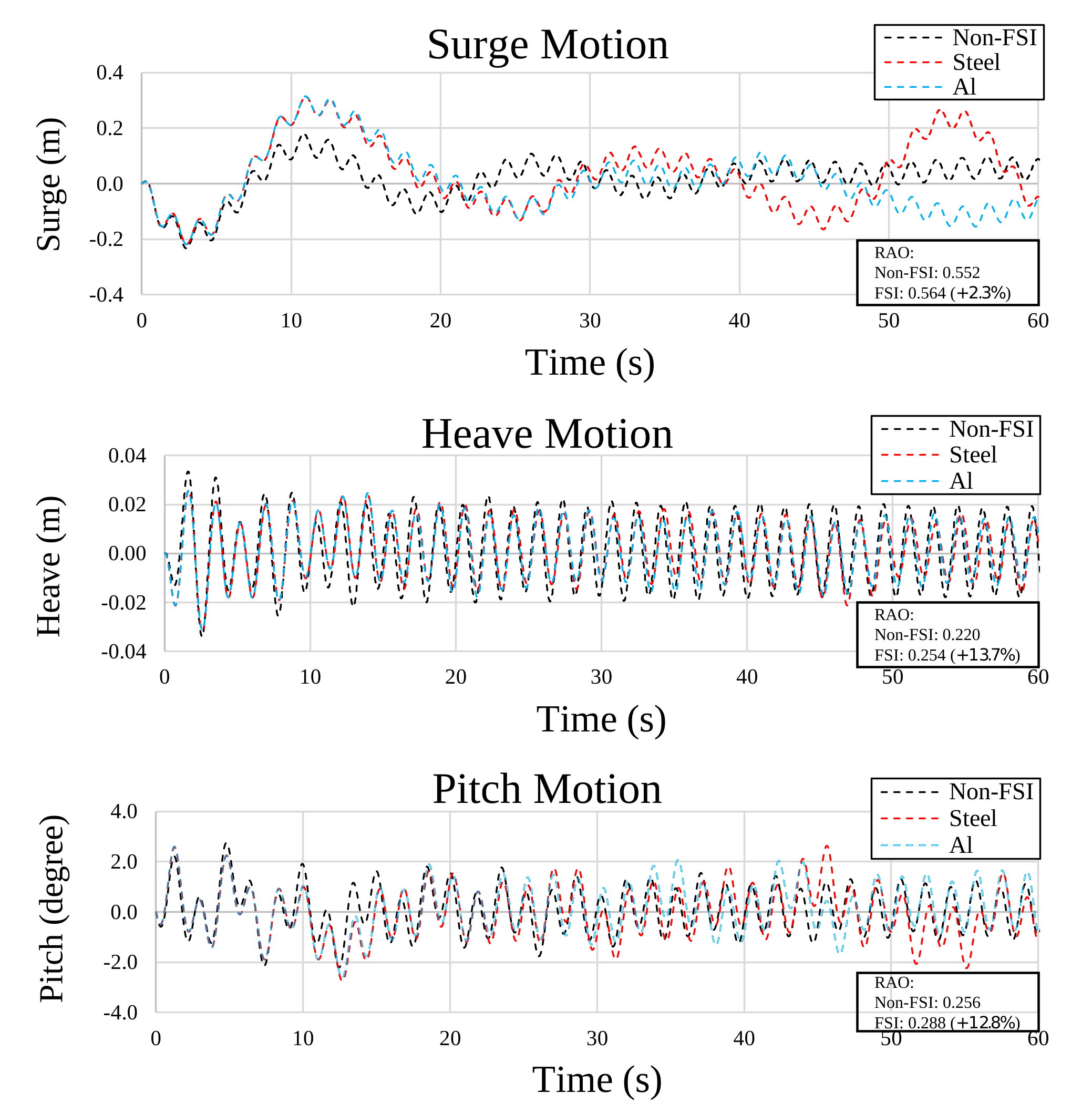
Figure 2.
Time history of platform motions (surge, heave, and pitch) for FSI (Steel, Al) and Non-FSI models
under regular wave condition (H = 0.148 m,
T = 1.697 s).
The motion histories compare the conventional rigid-body model with deformable-body steel and aluminium
configurations under identical regular-wave forcing. The results indicate that fluid–structure interaction effects
are dependent on both the motion mode and material properties, with distinct changes observed in surge, heave,
and pitch response.
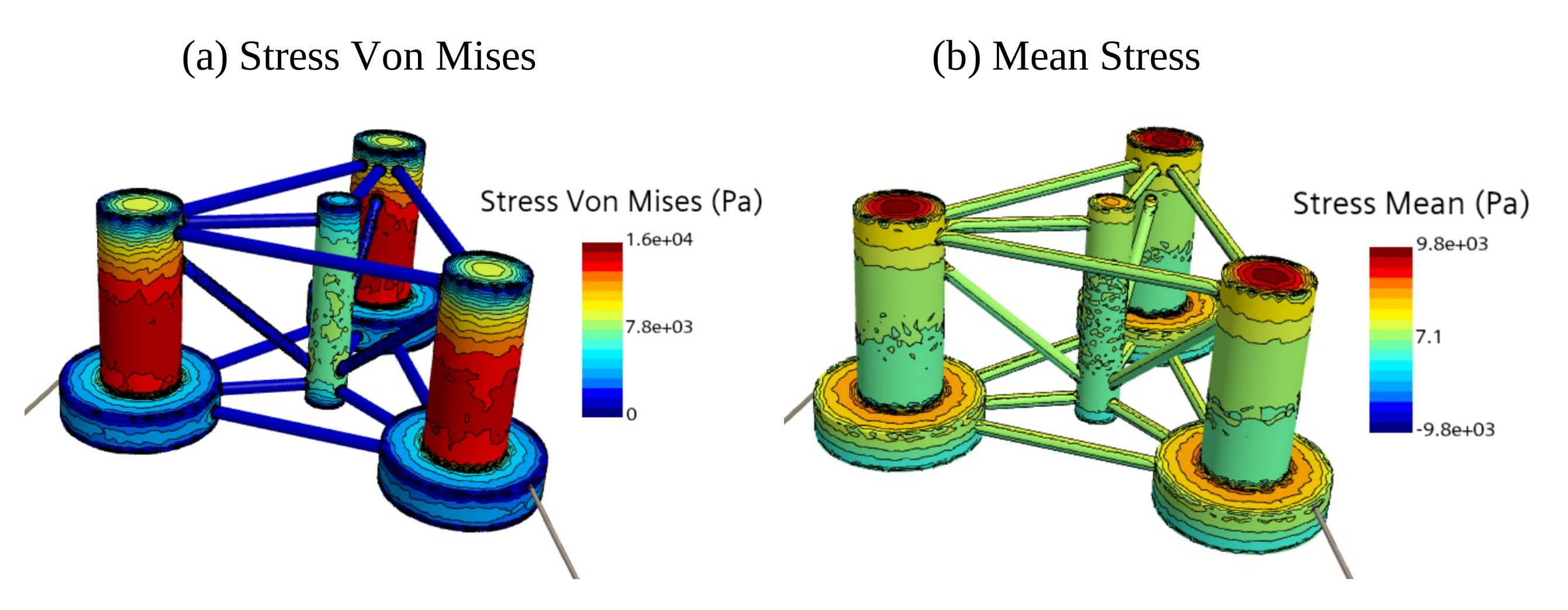
Figure 3.
Contour plot of Von Mises stress (left) and Mean Stress (right) in the semi-submersible platform
under regular wave condition (H = 0.148 m).
The structural stress fields identify localised loading regions within the deformable-body model. Von Mises
stress concentrations of approximately 16 kPa appear near the outer column bases, pontoon connections, and
central column joints, while the mean-stress distribution indicates compression around the lower
column–pontoon regions and tension near the column tops. These patterns provide a basis for preliminary
structural and fatigue assessment under wave excitation.