Temperature-induced errors in ITTC model-ship extrapolation
Journal of Marine Science and Engineering (2025)
Sang-seok Han1, 2,
Saishuai Dai 2,
Momchil Terziev 2,
Daejeong Kim 3,
Tahsin Tezdogan 4,
Doojin Jung 5,
Soonseok Song 1*
1
Department of Naval Architecture & Ocean Engineering, Inha University, Republic of Korea
2
Department of Naval Architecture, Ocean and Marine Engineering, University of Strathclyde, the United Kingdom
3
Division of Navigation Convergence Studies, Korea Maritime & Ocean University, Republic of Korea
4
Department of Civil, Maritime and Environmental Engineering, University of Southampton, the United Kingdom
5
Ship and Ocean Research, Hanwha Ocean, Republic of Korea
Abstract
This study addresses the question: “Does the towing tank water temperature affect the result of model-ship
extrapolation?”
While it is well-established that temperature variations affect Reynolds numbers and consequently frictional and
viscous resistance,
this study examines whether the ITTC 1978 extrapolation method properly compensates for these effects.
Although current procedures
consider temperature indirectly through the Reynolds number, they assume that the form factor depends solely on
the Froude number
and is insensitive to viscosity changes. Our analysis reveals that the form factor is also temperature-sensitive,
indicating a fundamental
limitation in the conventional approach. This sensitivity arises from the limitations of the ITTC 1957 friction
curve and the method’s neglect of
temperature-induced variations in the form factor.
To quantify the effect of temperature, model-scale CFD simulations were conducted for two ship models
(KCS and KVLCC2) at different water temperatures using the ITTC 1978 procedure with Prohaska’s method. The results
show that the ship-scale
total resistance coefficient (CT) can vary by up to 2.8% depending on the water
temperature and friction line selection.
This demonstrates that the ITTC 1978 performance prediction method fails to adequately compensate for the
temperature-induced changes in resistance, which leads to systematic errors in the extrapolated results.
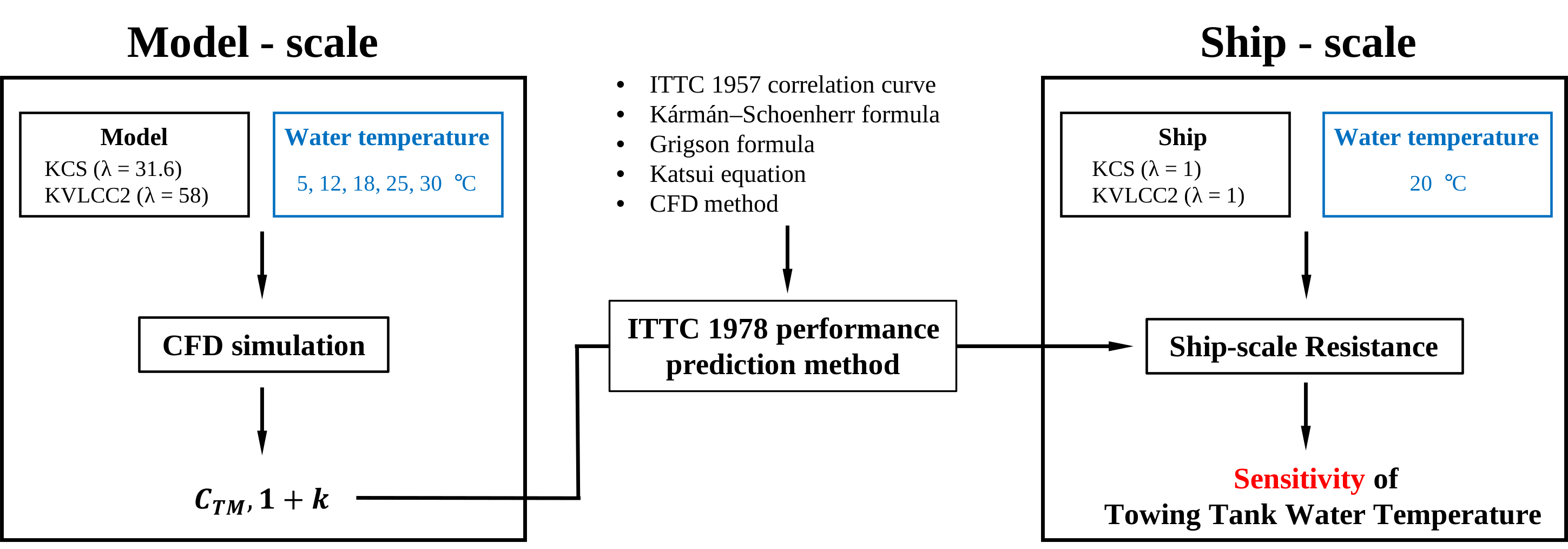
Figure 1. Schematic illustration of the research methodology.
This graphical abstract summarises the methodological framework used to assess how
towing tank water temperature influences ship-scale resistance predictions through
the ITTC 1978 extrapolation procedure.
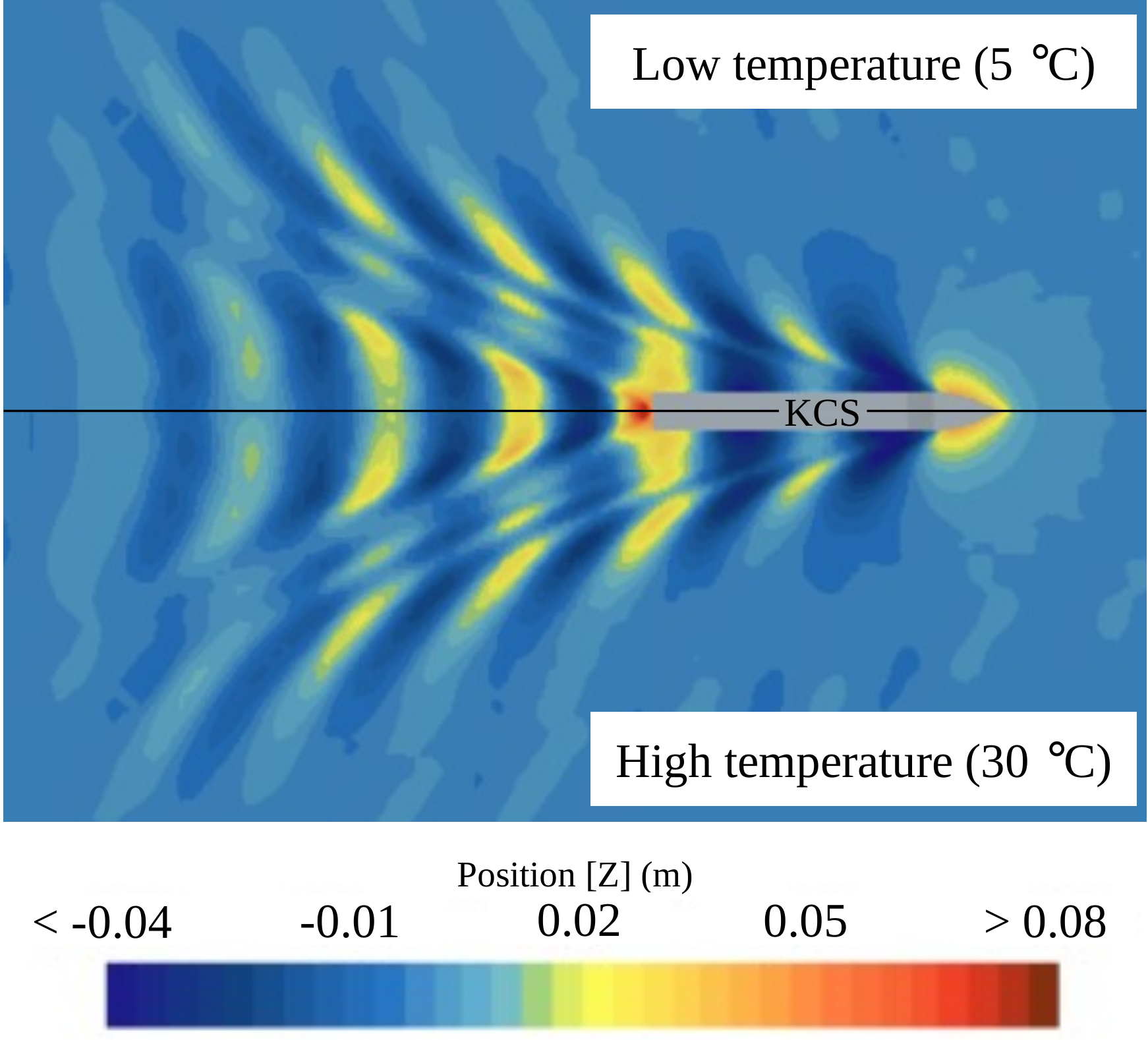
Figure 2. Wave patterns around KCS hulls at low (5 °C, top) and high (30 °C, bottom)
temperature.
Wave patterns at 5 °C and 30 °C exhibit nearly identical Kelvin wakes, indicating that
the temperature-induced variation in extrapolated full-scale resistance originates from
limitations of the ITTC friction curve rather than physical changes in wave-making resistance.
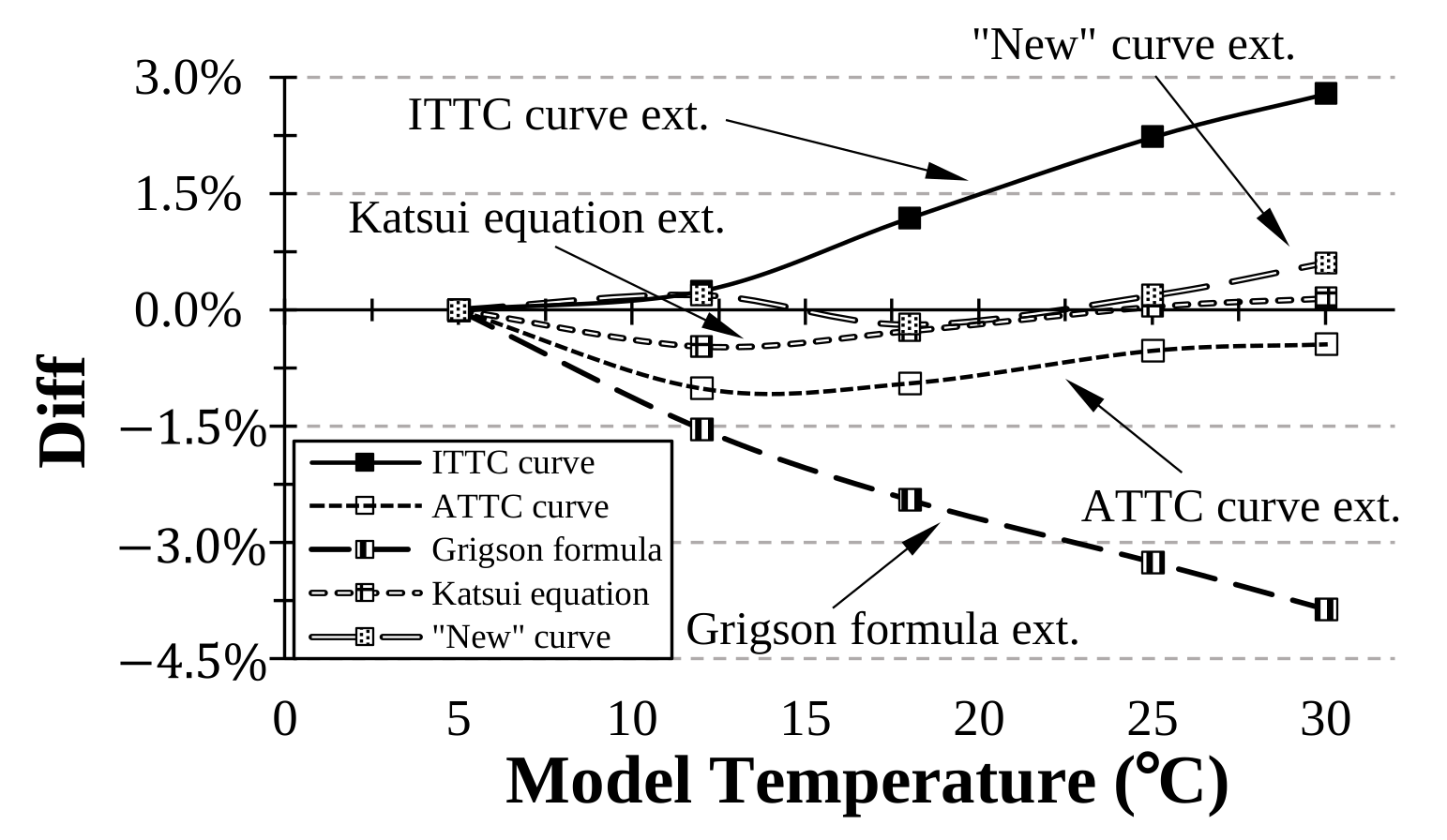
Figure 3. Temperature sensitivity of extrapolation methods under varying towing tank
temperature conditions (KVLCC2).
Extrapolated full-scale CT vary by up to ~3% with towing tank temperature when
using the ITTC friction curve,
whereas CFD-derived (“new”) friction formulations show negligible temperature sensitivity,
indicating that the observed variation originates from limitations in the ITTC-based friction resistance
modelling.