CFD-Based Model Predictive Control for Point Absorber Wave Energy Converter
The Japan Society of Naval Architects and Ocean Engineers Conference Proceedings, Vol. 41 (2025)
Sang-seok Han1,
Min-hong Lee 2
1
Department of Naval Architecture, Ocean and Marine Engineering, University of Strathclyde, the United Kingdom
2
Department of Naval Architecture and Ocean Engineering, Inha University, Republic of Korea
Summary
This study presents a pseudo-Model Predictive Control (pseudo-MPC) strategy for improving
energy absorption in point absorber-type Wave Energy Converters (WECs) using high-fidelity
Computational Fluid Dynamics (CFD) simulations. Unlike traditional MPC, which requires
real-time optimisation, the proposed approach uses a pre-computed damping law based on wave
amplitude, enabling real-time responsiveness without intensive computation.
Implemented within STAR-CCM+ using Field Functions and DFBI, the control is designed to
dynamically adjust the Power Take-Off (PTO) damping during two-phase flow simulations.
A four-stage simulation plan was conducted, including static model validation, wave tank
calibration, offline damping optimisation, and planned online control.
Initial results confirm the numerical validity of the CFD setup and quantify energy absorption
under fixed damping values across varying wave amplitudes. These outcomes provide a robust
foundation for the upcoming implementation of the pseudo-MPC control law, demonstrating that
real-time MPC-inspired control can be efficiently realised within CFD environments for future
adaptive WEC systems.
Conference paper (2025)
The Japan Society of Naval Architects and Ocean Engineers Conference Proceedings, Vol. 41
DOI:
10.14856/conf.41.0_979
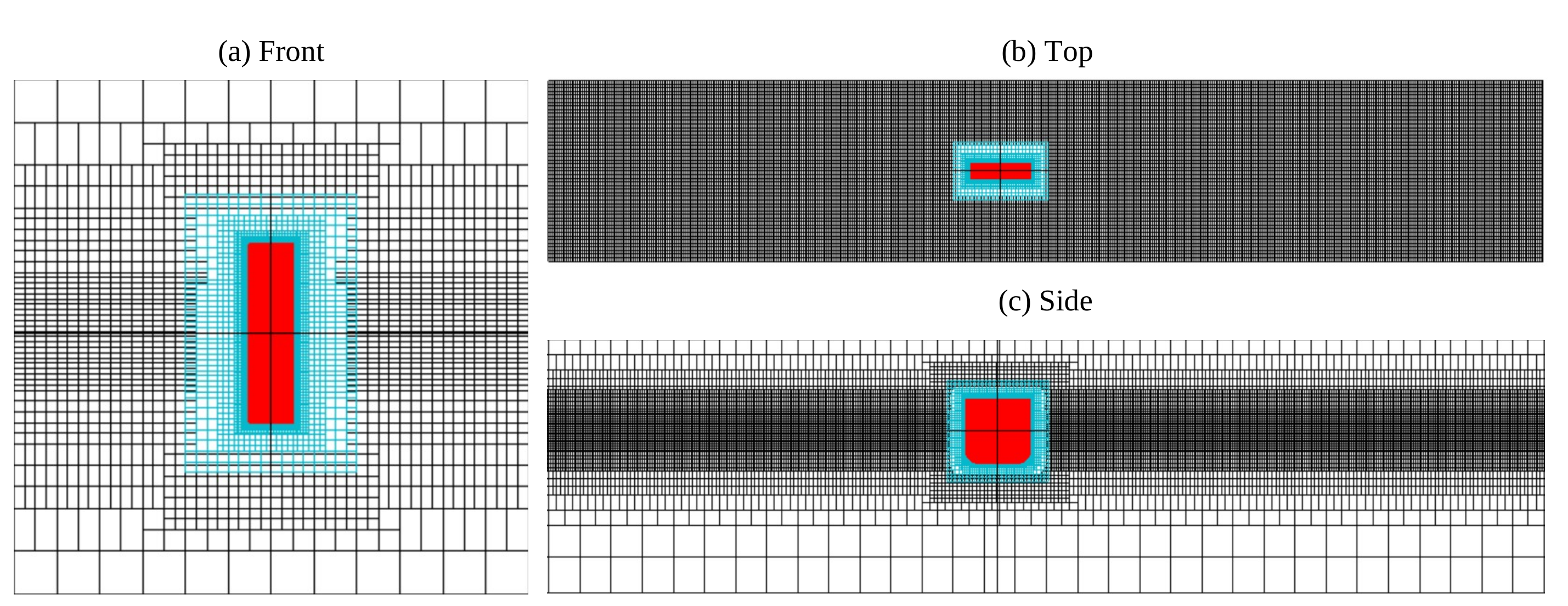
The computational domain uses a structured mesh with local refinement around the free surface
and the point absorber to resolve wave–body interaction. The mesh contains approximately
1.13 million cells for the small-wave case and 2.28 million cells for the large-wave case,
while the WEC motion is constrained to the vertical (heave) direction.
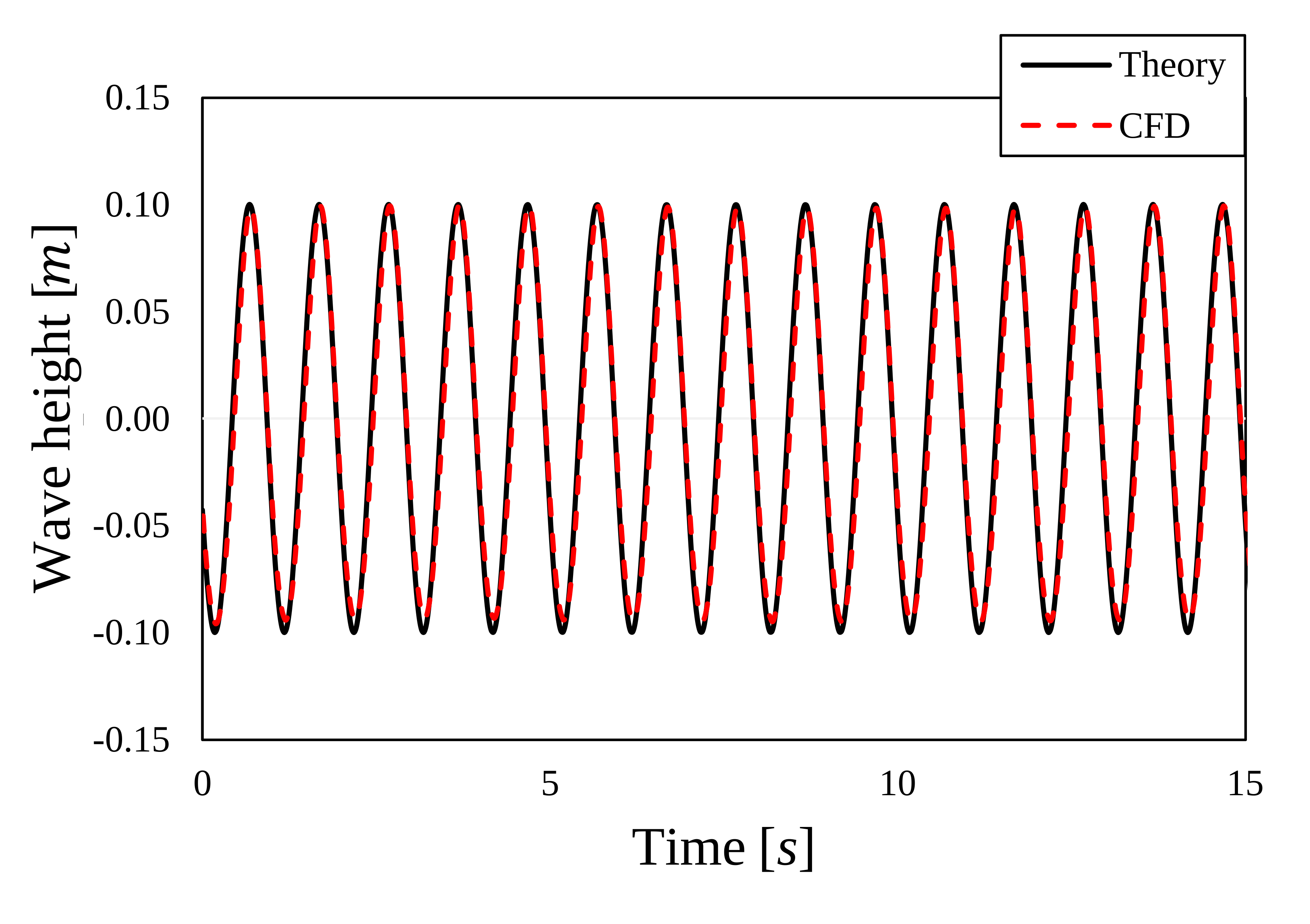
Figure 4.
Comparison of wave height: theoretical prediction vs. CFD simulation.
The body-free wave-tank simulation was used to verify wave generation before the control
study. For the regular-wave condition
(H = 0.1 m,
T = 1.0 s),
the CFD wave elevation closely follows the theoretical target in amplitude, period, and phase,
supporting the validity of the numerical wave environment.
Figure 7.
Real-time absorbed energy under two regular wave conditions:
(a) small wave and (b) big wave.
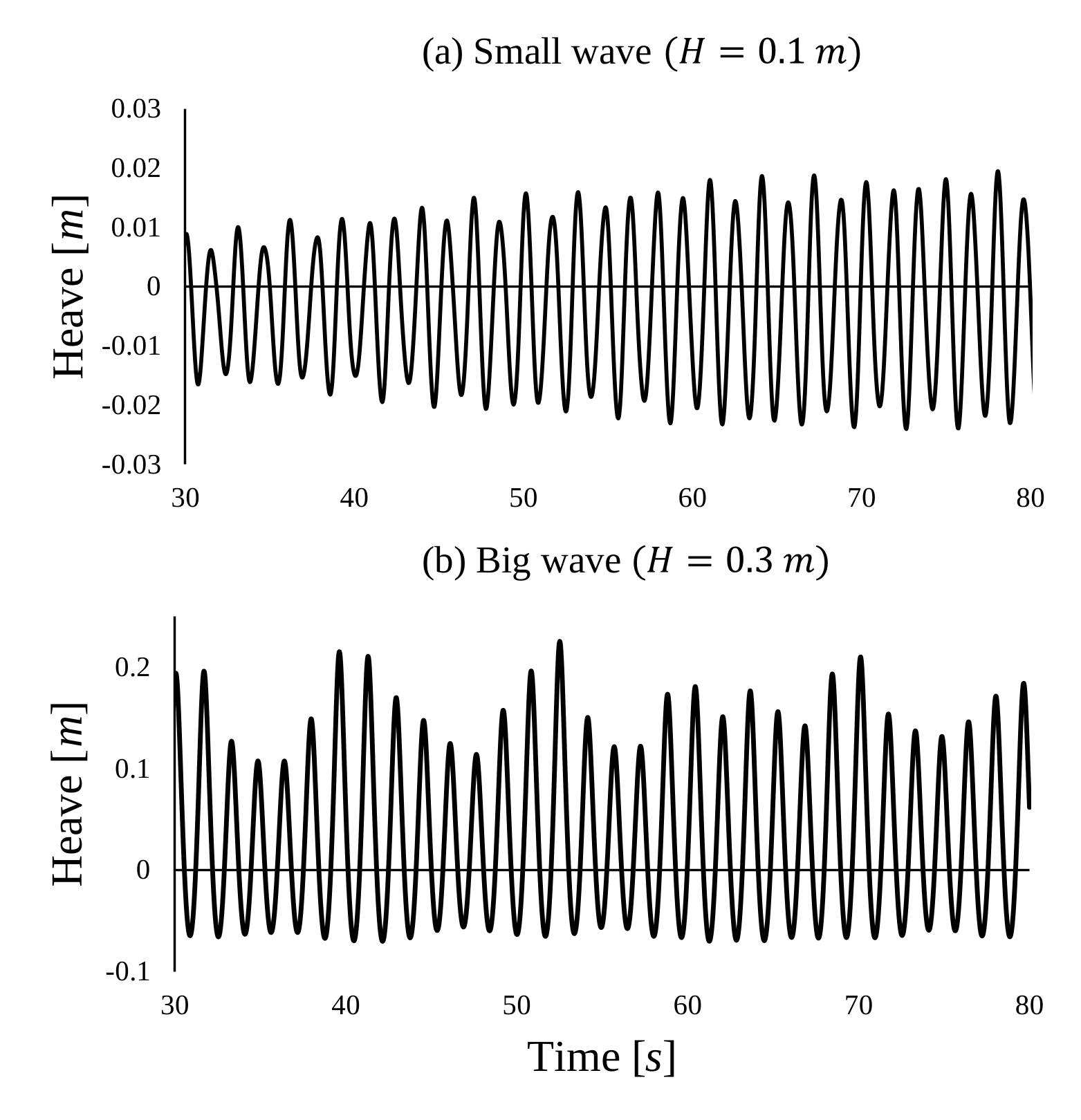
The offline phase compares energy absorption under fixed damping values selected for two
representative regular-wave conditions. Over 50 seconds, the study reports approximately
95 J of absorbed energy for the small-wave case and 4,980 J for the large-wave case.
These results form the basis for fitting the wave-amplitude-dependent damping law;
the fully dynamic online pseudo-MPC implementation is identified in the paper as planned work.